
Is the CMA certification worth it?
I’m going to be honest with you: becoming a CMA takes dedication – dedication of your time and finances.
So is the cost and effort of meeting the Certified Management Accountant requirements worth it?
In my opinion, there are so many benefits of the CMA designation, many of which I have had the pleasure of enjoying throughout my career.
So let’s take a look at what makes earning your CMA so valuable, and why this could be a great career path for you!
Originally published Feb. 10, 2020, this article was updated and republished on August 14, 2026.
The 6 Direct Benefits of Becoming a CMA
Like any worthwhile investment, becoming a CMA is not easy. But it can benefit your professional life in a wide range of ways. Let’s discuss six ways the certificate provides value to accounting professionals.
Exam Secrets Cheat Sheet

Becoming a CMA Increases Earning Potential
When considering a career path, it is totally understandable to consider your earning potential.
I often hear the same question: “Does a CMA certification increase my salary?” When it comes to CMA salary, I think you will find it quite appealing in comparison to other accounting salaries.
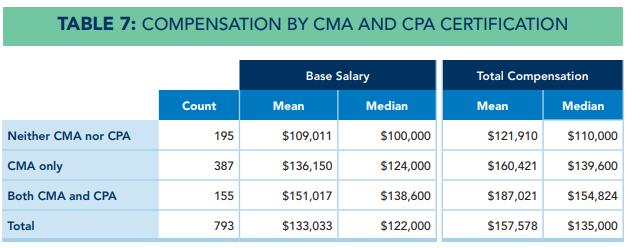
According to the IMA’s CMA Salary Survey, CMAs earn 14% to 43% more in total compensation than individuals without the CMA designation. A CMA in America (of any age) earns a median total compensation of $139,000.
The base salary and total compensation of CMAs in the US are shown in the table below.
Since the CMA designation is so versatile, several industries are looking for your expertise. You may be interested to know that some industries pay more than others.
For example, the highest median base salary for a CMA in America is in the information technology industry, where they earn a whopping $147,000. In comparison, the median base salary for a CMA in public accounting is $100,750. While both salaries are more than acceptable, it’s nice to know your options.
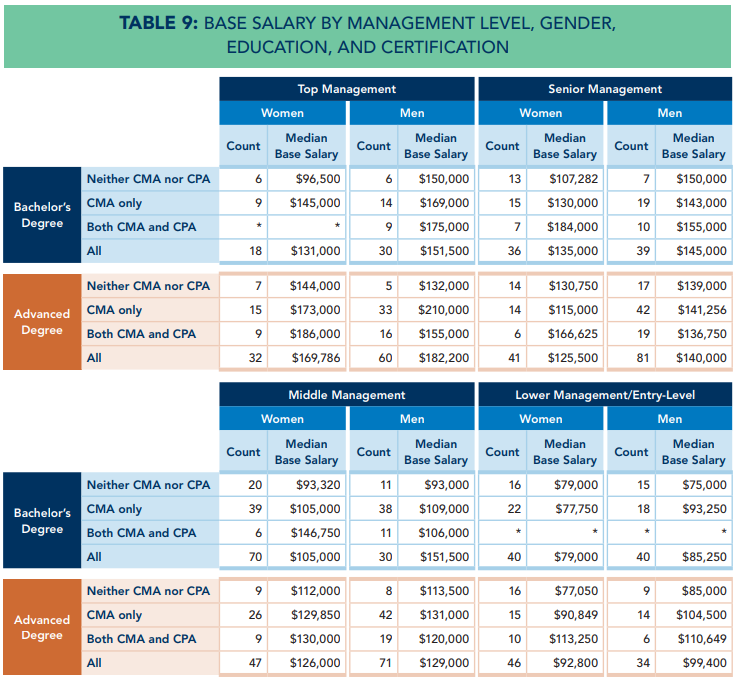
Below is a full breakdown of salary by management level, gender, education, and certification:
For a full dive into your earning potential across the globe, be sure to check out my CMA salary guide.
Being a CMA Helps You Advance Your Career
If you’ve ever wondered if a CMA certification helps in getting a job, the answer is a resounding yes!
Job opportunities are plentiful when you earn your designation, so choosing your CMA career may be difficult simply based on the high number of options available to you. What a CMA brings to the job is needed across countless industries.
Here is a look at some of the most exciting CMA jobs globally:
Management Accountant
If you thrive on planning and strategizing, then management accounting could be an exciting career path for you.
As a management accountant, you are responsible for budgeting, planning, and strategizing so that your company’s top managers and executives can focus on risk-assessed decisions about its financial future.
This position requires you to be an expert in accounting with high-level communication skills.
Management accountants find employment in private or public businesses or within government agencies.
Financial Analyst
Do the microeconomic aspects of finance thrill you? If so, becoming a financial analyst may be right for you.
For starters, financial analysts can work in many industries, including a bank or an insurance company, or even a startup or global enterprise.
This role requires careful attention to detail so the analyst can assess the financial condition of a potential investment to make sure it is worthwhile.
Other daily job duties include advising businesses on how to issue corporate bonds or split stock, as well as performing financial research and analysis to provide information on the business’s profitability, stability, liquidity, and solvency.
Cost Accountant
Cost accountants are responsible for recording and analyzing each cost incurred by a business. In turn, they use this information to identify where the company is losing money unnecessarily and how to improve financial management.
Typical job duties include preparing asset, liability, and capital account entries, documenting financial transactions, and making financial recommendations based on the analysis of financial history.
This role is highly valued across several business models, so you could find yourself working in the retail sector, consulting firms, or directly within a business or corporation.
Accounting Manager
Accounting managers develop and maintain accounting systems and procedures used by other accountants to collect and analyze data.
Some standard job duties for an accounting manager include overseeing daily operations, monitoring and analyzing data, creating financial statements and reports, as well as upholding strict accounting policies and principles.
In this role, you will oversee other accountants and would most likely work for a large company or organization where there are multiple accountants employed.
Senior Accountant
Senior accountants are more managerial than junior accountants, and tend not to perform administrative tasks. Instead, senior accountants are responsible for reporting cost margins, productivity, and expenditures within a company.
Your average day of work may include preparing month-end procedures, reconciling accountant balances, and maintaining a general ledger. Senior accountants often mentor junior staff as well and will likely be expected to lead accounting initiatives with other accounting teams and departments.
Corporate Controller
Did you know that I used to work full-time as a corporate controller while I was building my business?
Corporate controllers oversee a company’s financial and accounting functions, including everything from billing, accounts payable, accounts receivable, and budgeting.
Job duties include preparing the annual budget, preparing internal and external financial statements, assessing current accounting operations, as well as coordinating activities for external auditors.
Corporate controllers often oversee other accountants, so the skills and knowledge learned from earning your CMA are invaluable.
While the expertise of a controller can be utilized in any business, it is larger companies and organizations that tend to attract this position more.
Chief Financial Officer (CFO)
A chief financial officer is one of the top positions you can rise to as a CMA in business. Becoming a CFO gets you a high-level executive role and the compensation to match.
CFOs are largely considered the right hand to CEOs because they oversee everything from financial reporting and forecasting to a company’s investments and financial business decisions.
Some of the most critical job duties performed by a CFO include tracking cash flow, analyzing financial strengths and weaknesses, and proposing corrective actions.
You will need years of experience to develop the unique skills required to become a chief financial officer, but earning your CMA will definitely put you on the right path.
Being a CMA Gives You More Credibility and Status
Any professional designation can help boost your credibility within your professional network. But the CMA in particular is synonymous with excellence. That’s because achieving one requires dedication, focus, and motivation.
There’s a reason 83% of CMAs globally report feeling more confident and competent while completing high-level tasks: the process of obtaining one involves the demonstration of competency across a variety of topics.
This level of skill leads to improved networking and professional relationships, which can result in more growth and leadership opportunities.
The impact of earning a CMA also goes beyond personal confidence. According to the 2023 CMA global survey, 69% of CMAs say the certification improved their opportunities for career advancement or promotion, while 73% report expanded career opportunities overall. Perhaps most telling, 84% say they would recommend the CMA to a friend or colleague in a similar line of work. This is a strong testament to the value and credibility the designation brings.
Being a CMA Increases Your Financial and Accounting Skills
Approximately 71% of CMAs reported that their certificate enhanced their ability to work across all areas of a business. Many of the transferable skills they hone equip them to take on leadership roles in financial services and accounting departments.
But aside from this mobility, they also develop a more sophisticated understanding of finance and accounting skills. This is accomplished not only while they study for the CMA exam, but also when they complete their annual CPE hours.
The CMA Is the Most Global Management Accounting Certification
Professionals from all over the world benefit from becoming a CMA. According to the IMA’s Global Salary Survey, participants from all geographic regions involved in the survey reported significantly higher base salaries and total annual compensation rates.
So, while a bachelor’s degree or college certificate may not be valued equally in every country, the CMA is. That means the investment will pay off, no matter where your life takes you.
The CMA Certification Can Be Attained in a Short Timeframe
Another commonly overlooked advantage of earning the CMA certification is how quickly you can complete it.
The CMA exam consists of just two parts, and many candidates can pass both within eight months to a year. The CMA offers a far more streamlined path than other accounting designations, some of which require multiple exam sections spread over several years.
This shorter timeline can make a significant difference. After all, time is opportunity. The sooner you earn the CMA designation, the sooner you can leverage it for promotions, salary increases, and more strategic roles. Within a year, many candidates can become certified professionals.
Of course, this short timeframe doesn’t mean the CMA exam is easy. To increase your odds of passing on your first attempt, it’s generally recommended that you spend about 16 weeks preparing for each exam part.
Depending on your schedule, work commitments, and academic background, your timeline may extend beyond a year, which is still perfectly normal. Taking more time to prepare doesn’t diminish the value of the achievement.
When you consider the career acceleration that can follow, the opportunity to earn a globally respected credential in a relatively short period of time makes the CMA well worth considering.
How the CMA Designation Can Land You a Job with the Big Four
Ernst and Young (EY), Deloitte, KPMG, and PricewaterhouseCoopers (PwC) are known as the Big Four amongst accounting professionals. These are the four largest professional services networks in the world.
Landing a job with one of the Big Four is a career goal of many, so how can the CMA designation help you secure a future with one of them?
CMAs have a leg up on their non-certified peers because the CMA teaches you how to make high-level management decisions, which is a fundamental quality sought after by the Big Four.
Many individuals holding senior management positions in strategic planning, accounting, and finance are CMAs, therefore making them a great asset.
Additionally, the Big Four are constantly on the hunt for accounting professionals who can demonstrate the qualities needed to fulfill roles such as:
- Risk Management Advisory Manager
- Accounting & Reporting Transformation Senior Consultant
- Government & Public Sector Strategy Manager
- Risk Assurance Advisor (Manager)
- Risk Transformation Advisory Senior Manager
Fun fact: all of these roles are perfect for the unique skills learned as a CMA professional.
CMA Compared to Other Popular Accounting Certifications
One of the best ways to see if CMA certification is worth it is to compare its benefits against other popular designations, such as the CPA and CGMA.
CMA vs. CPA
You already know what a CMA is (an individual with a unique financial accounting and strategic management skill set), but a Certified Public Accountant, or CPA, is someone who is licensed to practice public accounting duties. CMAs tend to have a more strategic role, while CPAs are more into taxation, bookkeeping, and auditing.
If internal auditing sounds like an appealing job to you, it’s worth considering the CIA (Certified Internal Auditor) designation as well, and comparing whether the CMA vs CIA might be best for you.
CMA vs. CPA Requirements
Both CMA and CPA have several prerequisites you must fulfill in order to qualify for the designation.
In terms of the CMA education requirement, CMAs must have a bachelor’s degree in any field from an accredited university or college, or have a related professional certificate.
In addition to your education, you must obtain two consecutive years of CMA work experience in management accounting or financial management.
Even after you obtain your CMA certification, you will be required to complete 30 hours of continuing education every year.
To become a CPA, you must earn a four-year bachelor’s degree in accounting and have at least 150 credit hours of additional coursework. While some requirements vary from state to state, all states require that CPAs pass the CPA exam and maintain 40 hours of continuing education per year.
Both designations require you to complete and pass an exam. The CMA exam is made up of two parts, both of which have 100 multiple-choice questions and an case-based ection with two case-based questions (CBQs), reflecting a shift toward more practical, applied problem-solving.
The CPA exam is structured differently from the CMA exam. It consists of four separate exam sections.
Each section follows a similar format and is divided into five groups of questions called “testlets.” The first two testlets contain multiple-choice questions (MCQs), while the remaining three include task-based simulations (TBSs). Although the overall structure is consistent across all four parts of the CPA exam, the number of questions and simulations can vary by part.
Each exam section is four hours long, bringing the total testing time for the CPA exam to 16 hours.
CMA vs. CPA Salary
CMA and CPA salaries are relatively similar, but professionals who obtain both make more.
According to the most recent CMA Salary Survey conducted by the IMA, those holding their CMA certification earn an average base salary of $136,150. Meanwhile, those holding both a CMA and CPA earn an average base salary of $151,017.
CMAs in the US, on average, earn 24% more than their non-certified peers, whereas those holding both a CMA and CPA earn a median total annual compensation that is 39% higher than those without certifications.
If you take a look at the table below, you can see that CMAs with either a CMA or a CMA and CPA consistently earn more than their counterparts with neither.
CMA vs. CGMA
The Chartered Global Management Accountant certification (CGMA) is a direct competitor of the CMA. The CGMA is a collaboration of both the American Institute of Certified Public Accountants (AICPA) and the Chartered Institute of Management Accountants (CIMA), so you can earn this designation through either entity.
The Chartered Institute of Management Accountants (CIMA) pathway has many prerequisites similar to the CMA, but they do vary slightly. For example, CGMA candidates must fulfill three years of management accounting work experience, be a CIMA member, and pass 12 individual CIMA exams.
The American Institute of Chartered Public Accountants (AICPA) route is a much longer process because you must be a member as well as be an active CPA. This means you must have passed all four parts of the CPA exam and earned that certificate before acquiring three years of management accounting work experience and then passing the CGMA exam.
This route is ideal if you already have your CPA certificate and want to add the CMA designation to your resume, as well.
Below is a quick comparison of the exam essentials:
CMA | CGMA | |
Format | 2 Parts – MCQ and Case-Based Questions | 9 Objective Tests and 3 Case Study Exams (for the CIMA Professional Qualification route) |
Duration | 4 hours – 3 hours for 100 Multiple Choice Questions and 1 hour for 2 Case-Based Questions | 90 minutes for each Objective Test and 3 hours for each Case Study exam |
Testing Windows | January, February, May, June, September, October | February, May, August, November |
Exam Cost | $407 – $545 per part plus a one-time entrance fee that ranges from $225-300 | Included in the annual membership fee. |
Review Course Cost | $1,299 to $2,000+ depending on the provider | $4,395 and provided directly by CGMA |
Designation Maintenance | CMA continuing education – 30 hours CPE per year + IMA membership fee ($49 – $295) | Annual membership fee of £375 – £395 + annual dues to AICPA (for CPAs) |
Cost of Becoming a CMA
As discussed earlier, becoming a CMA is an investment. Let’s discuss some of the costs associated with the process.
The Financial Investment
Several factors contribute to the cost of becoming a CMA.
For starters, the CMA exam itself. To sit for each part of the CMA exam, you will pay $545, unless you are a student or academic, in which case, each part costs $407.
The student/academic fee does not apply to graduates, even if you just recently graduated.
Entrants are also required to pay a one-time non-refundable CMA entrance fee. The price for students and academics is $225, while the professional member fee is $300.
Candidates must become IMA members to qualify for the certification, and there are varying membership fees:
- Professional – $295/year
- Student – $49/year
- Academic – $160/year
You will also want to invest in a high-quality CMA review course to help you prepare for the exam.
The cost of review courses varies quite a bit and can be anywhere between $1,299 to $2,000+ USD for a decent one.
If you decide to self-study, textbooks and online cram courses can be as affordable as $59 a pop, but they do not offer the same quality of teaching experience.
Check out a full breakdown of CMA review course comparisons.
The Time Investment
It goes without saying that you will invest quite a bit of time into becoming a CMA, so is the CMA certification worth it after all that?
Ultimately, you will be the judge, but in my opinion, it definitely is! Let’s take a brief look at the average time invested in becoming a CMA.
CMA candidates must earn a three- or four-year Bachelor’s degree, in addition to preparing and sitting for the CMA exam.
If you are dedicated and efficient, you can do the latter in as little as eight months. To adequately prepare yourself for each part of the CMA exam, I highly recommend investing at least 200 hours per part. CMA Exam Academy offers an in-depth study plan that, when followed, takes 16 weeks per part.
You will also have to fulfill your work experience prerequisite, which is two consecutive years of management accounting experience. Note, you can earn your work experience as a part-time employee, but you must maintain at least 20 hours of work per week, and it has to be completed within four years.
Many of these prerequisites can be accomplished in parallel. For example, you can earn valuable work experience while attending school or studying for the CMA exam. It just requires a higher level of time management and dedication.
Potential Drawbacks
While the CMA certification offers clear advantages, it’s important to consider the potential drawbacks before committing.
Firstly, the CMA focuses on management accounting and strategic decision-making. In smaller companies that prioritize tax, compliance, or external reporting, a CPA designation may be preferred. In those environments, the skillset of a CMA may not be fully utilized.
Secondly, although the CMA exam consists of only two parts, earning the certification still requires you to invest a considerable amount of time and money. While the total cost is generally lower than many other professional certifications, exam fees and study materials can still add up. Additionally, not everyone passes on the first attempt. Retaking an exam means additional fees and more preparation time.
Understanding these potential drawbacks can help you plan more effectively and decide what makes the most sense for your current situation.
For many candidates, however, the long-term salary growth, expanded opportunities, and professional credibility that come with the CMA ultimately outweigh the short-term sacrifices. The key is to approach the process with a solid study plan and the discipline to follow through.
So, Is the CMA Certification Worth It?
If you’re wondering if obtaining the CMA certification is worth it, the answer is unequivocally yes. While becoming a CMA requires a lot of time and hard work, the benefits, salary increase, and opportunity potential that are unlocked once you obtain the CMA are well worth the effort.
By adding CMA to your resume, you will be opening yourself up to exciting career paths such as management accounting, corporate controller, financial analyst, and, with enough years of experience, chief financial officer.
The salary potential alone makes the CMA certification worth it. Those who hold a CMA certification in America make the highest median total compensation of all regions, bringing in around $139,000 annually.
The CMA designation will help you stand out in the industry. Your specialized skill set will make you an asset to large companies that need candidates with a strong understanding of planning and analysis. While artificial intelligence (AI) in accounting is changing the industry, the higher-level skills of a CMA will be more in demand than ever.
Finally, this certification is well worth it when you realize how in-demand you are. Companies are desperately seeking the knowledge and skills offered by CMAs, and the best part is that we are in low supply, so now is the time.
Interested in learning how to become a CMA and turn your dreams into a reality?
Learn how CMA Exam Academy’s 16-Week Accelerator Program can help you get one step closer to a fulfilling career in finance and accounting today!

Hi, I’m Nathan Liao (aka the CMA Coach)! For the last 11 years, over 100,000 accounting and finance leaders came knocking at my door seeking guidance and help. If you’re also aiming to pass the CMA exam on your very first try—without wasting away time or money—you’ve found your ultimate guide. Dive in deeper to discover more about me and the dedicated team that powers CMA Exam Academy. Click here and let’s embark on this journey together!
4 Comments on “Is the CMA Certification Worth It?”
i am happy that you are supporting us put we need time to put a plan for that
Earning the CMA certification definitely requires a lot of time investment and dedication, but it’s all worth it! The CMA certification will boost your career and will open the door to a multitude of career opportunities.
Thank you, this content right here was very informative. I feel confident I will pass and receive my CMA.
Thanks,
Tawana
My pleasure, Tawana. Here’s to you becoming a CMA in 2020! 🙂